
How Much Does a New Roof Cost in Coeur d’Alene, Idaho?


The cost of a new roof in Coeur d’Alene, Idaho, can vary significantly from one home to another. Roof size, material selection, pitch, architectural complexity, existing roof condition, ventilation, decking repairs, and accessibility can all influence the final cost of a roof replacement.
This makes it difficult to answer the question with a single number.
Two homes with similar interior square footage can have very different roofing costs.
One may have a simple gable roof with asphalt shingles, while another may include steep slopes, several valleys, dormers, skylights, chimneys, and multiple roof levels.
Local conditions are another consideration. Homes in Coeur d’Alene and throughout North Idaho experience snow, rain, summer heat, freezing temperatures, wind, and seasonal temperature changes. Roofing systems must be designed and installed with these conditions in mind.
Understanding how roof replacement pricing works can make it easier to evaluate the condition of a roof, compare materials, understand estimates, and plan for future roofing expenses. Coeur d’Alene Roofing provides educational information to help homeowners better understand the factors that can influence roofing costs and long-term planning.
Understanding Roof Replacement Cost in Coeur d’Alene
A roof replacement is not simply the purchase of new shingles.
A residential roofing system contains several components that work together to protect the structure from water and weather.
Depending on the home, a roof replacement can involve removing existing materials, inspecting the roof deck, replacing damaged wood, installing underlayment, updating flashing, improving ventilation, installing new roofing materials, and disposing of construction debris.
Each of these steps can influence the overall project cost.
For this reason, roof replacement prices are generally based on the characteristics of the individual roof rather than the interior square footage of the house.
Roof Size and Roofing Squares

Roof size is one of the primary factors used to determine the amount of material and labor required.
In the roofing industry, roof area is commonly measured in roofing squares.
One roofing square equals approximately 100 square feet of roof surface.
A 2,000-square-foot roof, for example, contains approximately 20 roofing squares before waste is considered.
However, a 2,000-square-foot house does not necessarily have a 2,000-square-foot roof.
Roof pitch increases the actual surface area. Garages, covered patios, porches, additions, overhangs, and other architectural features can also increase the amount of roofing material required.
Waste must also be considered because shingles and other materials need to be cut around edges, valleys, hips, penetrations, and other roof features.
Complex roofs generally create more material waste than simple roof designs.
Why House Square Footage Can Be Misleading
Homeowners sometimes estimate roofing costs using the advertised square footage of their home.
This can produce inaccurate results.
Interior square footage measures living space. Roofing measurements calculate the actual exterior roof surface.
Consider two 2,000-square-foot homes.
A two-story home with a relatively simple roof may have a smaller roof footprint than a sprawling single-story home with the same interior living area.
The single-story property may therefore require considerably more roofing material.
This is why actual roof measurements are more useful than house square footage when estimating roof replacement costs.
Asphalt Shingle Roofing Costs
Asphalt shingles are commonly used on residential properties throughout the United States, including North Idaho.
Their popularity comes partly from the range of products available.
Basic shingles, architectural shingles, and premium designer shingles can differ in thickness, appearance, construction, warranty terms, and price.
Architectural shingles are frequently selected for residential roof replacements because they create a dimensional appearance and are available in numerous colors and styles.
The shingles themselves represent only one part of the total roofing cost.
An asphalt roofing system can also require:
Underlayment
Starter shingles
Ridge cap shingles
Flashing
Drip edge
Fasteners
Pipe boots
Ventilation components
Ice and water protection in applicable areas
Material quality and installation requirements can therefore affect the total price even when two roofs use the same general category of roofing.
Metal Roofing Costs

Metal roofing represents another option for some Coeur d’Alene homes.
The initial cost of a metal roof is often higher than a standard asphalt shingle installation because of material costs and specialized installation requirements.
There are also several types of metal roofing.
Standing seam systems, exposed-fastener panels, metal shingles, and other products have different designs and installation methods.
Roof geometry can have a substantial effect on metal roofing costs. A simple roof with long, uninterrupted sections is generally easier to cover than a roof containing numerous valleys, dormers, chimneys, walls, and transitions.
More complicated roofs require additional cutting, flashing, trim, and labor.
Roof Pitch and Its Effect on Cost
Roof pitch describes the steepness of a roof.
A low or moderate slope can generally be easier to work on than a steep roof.
As roof pitch increases, installation can require additional safety measures, equipment, staging, and labor.
Steeper roofs also have more actual surface area than a flat measurement of the building footprint might suggest.
For example, two homes could have identical footprints while having different roof areas because one roof has a significantly steeper pitch.
Pitch is therefore important both for material calculations and labor requirements.
Roof Complexity

Roof complexity can have as much influence on cost as roof size.
A simple gable roof consists primarily of two roof planes.
More complicated houses may include:
Hips
Valleys
Dormers
Skylights
Chimneys
Multiple roof levels
Intersecting rooflines
Wall transitions
Plumbing penetrations
Ventilation penetrations
Every additional feature requires roofing materials to be measured, cut, fitted, and sealed correctly.
Valleys and roof-to-wall transitions deserve particular attention because they concentrate water flow and require careful flashing and installation.
A smaller complicated roof can therefore require more labor than a larger simple roof.
Removing the Existing Roofing System
Many roof replacement projects begin by removing the existing roofing materials.
This process is commonly called a tear-off.
Removing the old roof allows the underlying roof deck to be examined directly.
The amount of labor and disposal required depends partly on how many layers of roofing material are present.
A roof with one layer of asphalt shingles will generally produce less debris than a roof with multiple existing layers.
Different materials also have different weights and disposal requirements.
After removal, roofing debris must be collected, transported, and disposed of appropriately.
These activities are part of the overall economics of a roof replacement.
Roof Decking and Hidden Damage
Roof decking is the structural surface installed over the roof framing.
Modern residential roofs commonly use plywood or oriented strand board, although older homes may contain different decking systems.
The decking must provide a stable surface for the roofing materials.
Moisture intrusion can damage roof decking over time.
Potential signs of deterioration include:
Soft wood
Rot
Delamination
Sagging
Water staining
Damaged sections around previous leaks
Some decking problems can be identified from the attic or during an inspection, while others become visible only after the existing roofing materials have been removed.
This is one reason the final cost of some roof replacements can differ from preliminary expectations.
If deteriorated decking is uncovered during tear-off, the affected sections generally need to be addressed before new roofing materials are installed.
The Role of Roofing Underlayment
Underlayment is installed between the roof decking and the exterior roofing material.
It provides an additional protective layer within the roofing system.
Different types of underlayment are available, including traditional felt products and synthetic materials.
Certain roof areas may also use specialized water-resistant membranes.
The type and amount of underlayment required can depend on roof design, roofing material, installation specifications, and applicable construction requirements.
Although underlayment is hidden after the roof is completed, it is an important component of the system.
Flashing and Roof Replacement Costs
Flashing is used to manage water around vulnerable roof areas.
It is commonly found around:
Chimneys
Skylights
Valleys
Plumbing vents
Walls
Roof transitions
Flashing can be made from different materials and configured differently depending on the application.
Complex roofs naturally require more flashing work.
The condition of existing flashing is also relevant during replacement.
Some components may need to be replaced rather than reused, particularly if they are deteriorated, improperly installed, or incompatible with the new roofing system.
Because many roof leaks occur around penetrations and transitions, flashing quality has an important role in overall roof performance.
Ventilation and the Roofing System
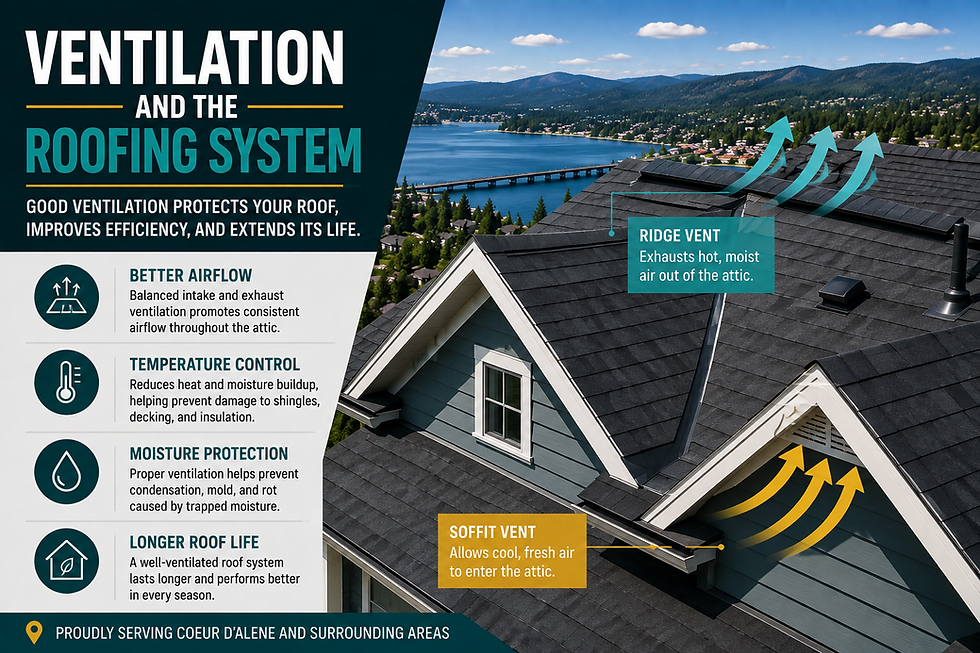
Attic ventilation is another factor that can influence a roof replacement project.
A ventilation system generally involves both intake and exhaust.
Soffit vents are commonly used for intake, while ridge vents or other roof vents may allow air to exit higher in the attic space.
The purpose is not simply to cool the roof.
Ventilation helps manage heat and moisture conditions within the attic.
Insufficient ventilation can contribute to moisture accumulation and may affect roofing materials, insulation, and wooden structural components.
When an existing roof is replaced, the ventilation configuration may be evaluated as part of the overall roofing system.
Why Coeur d’Alene Climate Matters
Roofing requirements are influenced by local environmental conditions.
Coeur d’Alene experiences a climate with distinct seasonal changes.
Roofs can be exposed to snow and freezing temperatures during colder periods, rainfall and moisture, warm summer temperatures, wind, and repeated freeze-thaw cycles.
Each condition affects roofing materials differently.
Snow adds weight to a structure.
Wind can place stress on shingles and roof edges.
Rain tests flashing, valleys, penetrations, and drainage.
Temperature changes cause building materials to expand and contract.
These conditions make proper material selection, drainage, flashing, ventilation, and installation important considerations for homes in North Idaho.
Snow and Roof Design
Snow is only one part of the local climate, but it has several implications for roofing systems.
Accumulated snow adds weight to the roof structure.
As snow melts, water needs a clear path toward gutters and drainage areas.
Temperature differences across a roof can also cause snow to melt unevenly.
Roof slope, attic insulation, ventilation, sun exposure, and roof orientation can all influence how snow behaves on a particular house.
These factors help explain why two neighboring homes can experience different roofing conditions during the same winter.
Trees and Roofing in Coeur d’Alene
Trees are another local consideration that homeowners may overlook when evaluating roof condition.
Properties surrounded by mature trees can experience additional accumulation of needles, leaves, branches, and organic debris.
Debris can collect in valleys and gutters, potentially interfering with normal water drainage.
Branches can also contact roofing materials during wind events.
Shaded sections of a roof may remain damp longer than areas receiving direct sunlight.
This does not automatically mean homes surrounded by trees require different roofing materials, but surrounding vegetation is one factor that can affect maintenance requirements and long-term roof condition.
Roof Accessibility
Accessibility can influence labor requirements.
A roof that is easy to reach from an open driveway may present a different working environment from a roof surrounded by steep landscaping, fences, neighboring structures, trees, or limited equipment access.
Roof height also matters.
A single-story home may be easier to access than a multi-story structure.
Material delivery and debris removal must also be considered.
Crews need to move roofing materials onto the structure and remove old materials safely.
Properties with limited access can require additional handling.
Chimneys, Skylights, and Other Penetrations

Every opening through a roof creates an area requiring additional installation work.
Common penetrations include plumbing vents, exhaust vents, chimneys, skylights, and mechanical components.
These features require flashing or specialized sealing systems.
A roof with ten penetrations will generally require more detailed work than an otherwise identical roof with only two.
Skylights deserve particular attention because their flashing systems integrate directly with surrounding roofing materials.
Older skylights may also be evaluated during roof replacement because replacing one later can require disturbing portions of a relatively new roof.
Labor as Part of Roof Replacement Cost
Roofing is labor-intensive work.
The labor component includes much more than placing shingles onto a roof.
A typical replacement can involve protecting the surrounding property, removing existing materials, inspecting the deck, carrying materials, installing underlayment, completing flashing details, installing the finished roof covering, working around penetrations, cleaning the site, and removing debris.
Labor requirements increase as roofs become steeper or more complicated.
Weather conditions can also influence productivity and scheduling.
For these reasons, labor should be considered a major component of total roof replacement cost rather than a small addition to material prices.
Why Roofing Estimates Can Differ
It is common for homeowners to receive different prices for the same roof.
Part of the difference may come from how each project is specified.
One estimate may include upgraded underlayment, new flashing, ventilation modifications, premium shingles, or additional protective components.
Another may use different materials or include a different scope of work.
Even estimates using the same shingle manufacturer can vary because a roof consists of much more than shingles.
When analyzing roofing costs, it is therefore useful to compare the individual components of each proposed roofing system rather than looking only at the total price.
Roof Repair vs. Complete Replacement
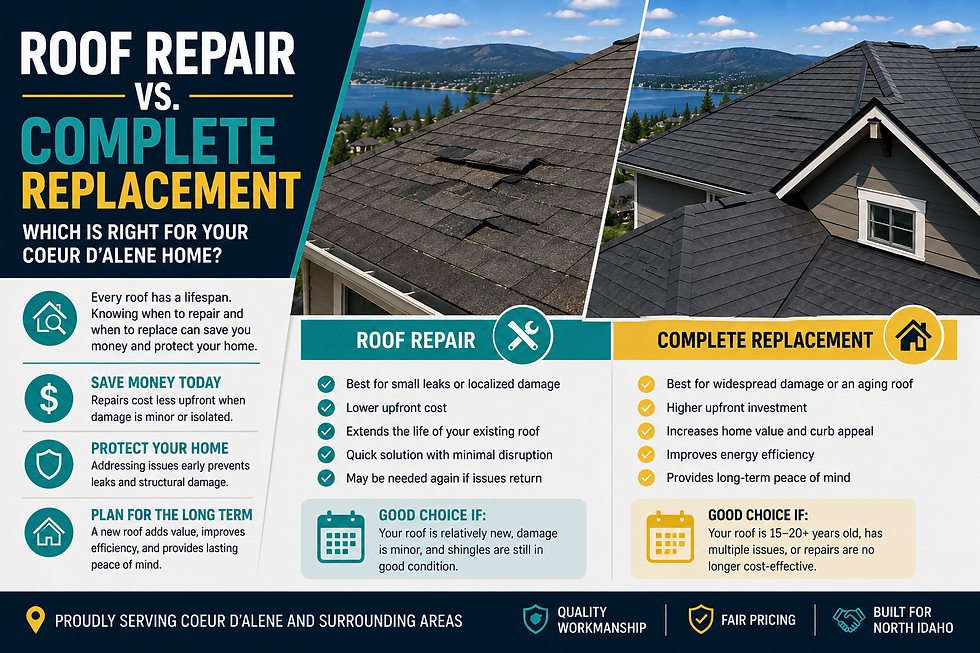
Not every roofing problem requires complete replacement.
Localized damage may sometimes be repaired.
Examples can include isolated flashing problems, a limited area of damaged shingles, or damage associated with a specific penetration.
Complete replacement becomes more relevant when deterioration is widespread.
Roof age is also important, although age alone does not determine whether replacement is necessary.
The actual condition of the materials, history of leaks, decking condition, ventilation, installation quality, and extent of damage all contribute to the decision.
Repeatedly repairing an extensively deteriorated roofing system may eventually become less practical than replacing it.
How Long Can a Roof Last in Coeur d’Alene?
Roof lifespan varies considerably.
Material is one factor, but it is not the only one.
Longevity can be affected by:
Installation quality
Roof orientation
Sun exposure
Ventilation
Moisture
Maintenance
Tree coverage
Roof pitch
Weather exposure
Material quality
A roof section receiving intense sun exposure may age differently from a shaded section.
Likewise, a roof with effective drainage and ventilation may experience different conditions from one where moisture regularly accumulates.
This makes generalized lifespan estimates useful as reference points but not guarantees.
Maintenance and Long-Term Roofing Costs
Roof replacement is not the only roofing expense homeowners should consider.
Maintenance can influence the long-term condition of the system.
Basic roof maintenance may involve keeping gutters clear, removing excessive debris, watching for damaged shingles, checking flashing, observing attic conditions, and identifying leaks early.
Small problems can sometimes cause larger secondary damage when they remain unnoticed.
For example, a minor flashing issue can allow moisture to reach decking, insulation, drywall, or structural wood.
Regular observation is therefore part of managing the long-term cost of home ownership.
When Should a Roof Be Inspected?
Roof inspections can be useful when a roof begins showing visible signs of deterioration or following significant weather events.
Homeowners may also pay attention to conditions inside the house.
Water stains, unexplained attic moisture, visible daylight through roof areas, or changes in ceilings can indicate that further investigation is appropriate.
Exterior warning signs can include missing shingles, damaged flashing, exposed fasteners, deteriorated sealants, excessive granule accumulation, or visible changes in roof surfaces.
Identifying the source of a problem early can make it easier to understand the extent of the damage.
Does a New Roof Affect Home Value?
Roof condition is one component of overall property condition.
A newer roofing system can reduce uncertainty about near-term roof replacement, while an aging or visibly deteriorated roof may become an important consideration during a property transaction.
However, the relationship between roof replacement cost and home value is not necessarily one-to-one.
A homeowner should not automatically assume that every dollar spent on roofing will produce an equal increase in resale price.
The financial impact depends on the property, local housing market, roof condition before replacement, material choice, and many other factors.
The primary function of roofing remains protection of the structure.
Understanding the True Cost of a New Roof
The true cost of a new roof in Coeur d’Alene cannot be determined accurately from one national average or a simple price-per-square-foot figure.
Roof size matters, but so do pitch, complexity, material selection, existing layers, decking condition, ventilation, flashing, penetrations, accessibility, disposal requirements, and labor.
Local environmental conditions add another layer to the calculation.
A roofing system in North Idaho must function through changing temperatures, precipitation, snow, wind, sunlight, and moisture over many years.
For homeowners researching how much a new roof costs in Coeur d’Alene, Idaho, the most useful approach is to understand the individual components that create the total cost.
The visible roofing material is only the outermost part of a much larger system.
Decking provides the structural surface. Underlayment creates another protective layer.
Flashing manages water around vulnerable areas. Ventilation helps control attic heat and moisture. The finished roofing material protects these components from direct exposure.
Understanding how these pieces work together provides a much clearer picture of why roof replacement costs vary and why two apparently similar homes can require very different roofing projects.
Frequently Asked Questions About Roof Costs in Coeur d’Alene
Why do roof replacement prices vary so much?
Roof replacement prices vary because homes have different roof sizes, slopes, designs, materials, access conditions, decking conditions, flashing requirements, ventilation systems, and numbers of penetrations.
Is roof size based on the square footage of the house?
Not directly. Roofing calculations are based on actual roof surface area. A home’s interior square footage can be substantially different from its roofing square footage.
What is a roofing square?
A roofing square is a standard industry measurement equal to approximately 100 square feet of roof surface.
Can damaged roof decking increase replacement costs?
Yes. If deteriorated decking is discovered, affected sections may need to be replaced before new roofing materials can be installed.
Why does roof pitch affect cost?
Steeper roofs generally have greater surface area and can require additional labor, safety equipment, and installation time.
Are asphalt shingles and metal roofing priced the same?
No. The materials and installation methods differ considerably. Metal roofing generally has a higher initial cost than conventional asphalt shingles, although the specific difference depends on the roofing system and roof design.
Does a complicated roof cost more to replace?
Generally, complexity increases labor and material requirements. Valleys, dormers, skylights, chimneys, multiple roof levels, and other architectural features require additional cutting, flashing, and detailed installation.
Can trees affect roof condition?
Yes. Trees can contribute shade, organic debris, falling branches, and gutter accumulation. These factors can influence moisture conditions and maintenance requirements.
Is the cheapest roofing material always the least expensive option long term?
Not necessarily. Long-term roofing costs depend on material lifespan, installation quality, maintenance, repair requirements, and environmental exposure. Initial material price represents only one part of total ownership cost.
Why is Coeur d’Alene’s climate relevant to roofing?
Coeur d’Alene homes experience seasonal temperature changes, precipitation, snow, freezing conditions, summer sun, wind, and moisture. These conditions affect roofing materials and make drainage, flashing, ventilation, and proper installation important parts of roof performance.